
The short answer
Make the title, the level, the scope and the support tell the same story before you name the role. Be specific about what sits around a sole developer, whether that is a fractional CTO, an architecture already in place or a funded second hire. Then move fast, because strong candidates are in two conversations already.
Hiring a founding engineer is one of the hardest hires to get right, and it is rarely because the talent is missing. More often the role and the offer drift slightly apart while no one is really looking, and strong candidates pick up on it quickly. I have seen this pattern across a number of founding-engineer searches, and the good news is that it is very fixable once you know what to look for.
If you are about to hire a founding engineer, here is how to give yourself the best chance, drawn from what strong candidates consistently tell me matters to them.
What Is the Role, Before You Name It?
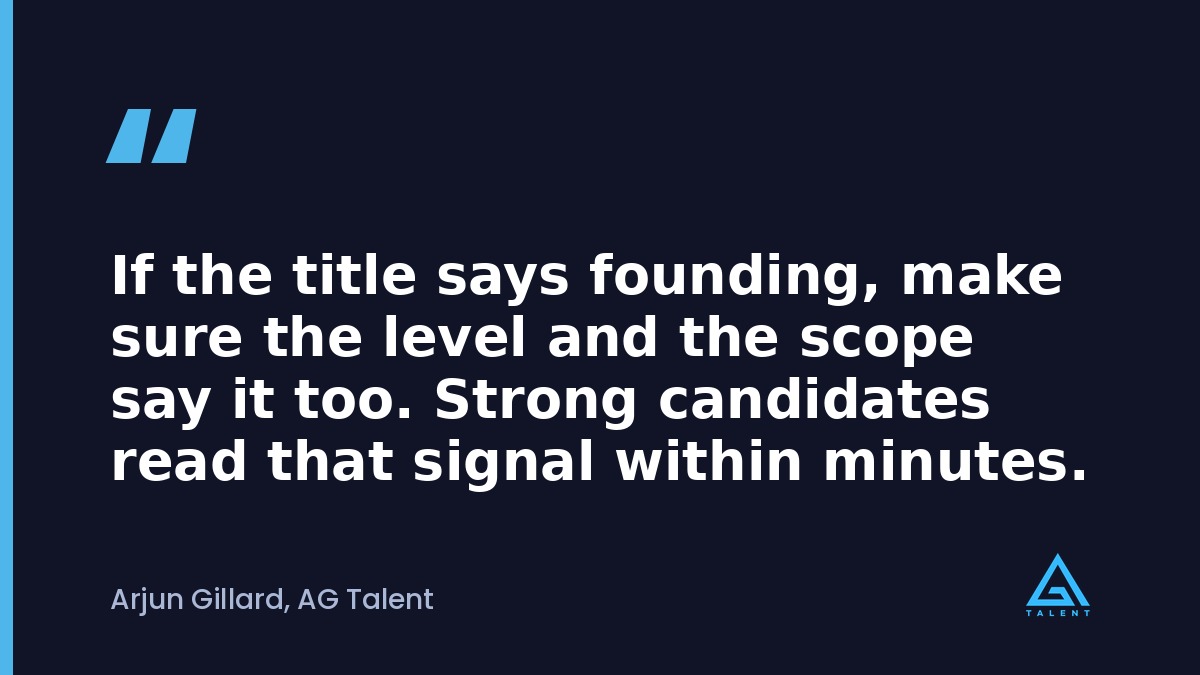
“Founding engineer” is a wonderful title, and it should be. To an experienced engineer it carries a specific meaning. You will own the architecture, make decisions that outlast you, carry real technical risk, and quite possibly be the only person doing it for a while. That is a senior, high-trust role, and the engineers worth hiring treat it that way.
The thing that is easy to miss, from the inside, is when the title and the rest of the role do not quite line up. It is rarely deliberate. The title feels motivating, the scope evolves, and small gaps are hard to spot when you are close to it. Strong candidates pick up on them quickly, though, and rather than feeling flattered they feel unsure about what the role really is. The fix is simple. Make sure the level, the scope and the support all tell the same story as the title. The free founding engineer JD builder walks through exactly that. When they line up, the right person recognises the role for what it is.
What Support Sits Around a Sole Developer?
The strongest engineers are not put off by owning a lot. Many have done it before and enjoy it. What they want to understand is the shape of the role and, above all, what sits around it.
A sole developer owns everything, including the occasional late-night issue with no second pair of eyes. The best people can handle that happily, as long as they can see the company has thought it through. That support might be a fractional CTO for guidance on patterns and tradeoffs, a clear architecture already in place, or a credible plan to bring in a second engineer before long. Spelling it out helps enormously. A role that says “you will own delivery, a fractional CTO is on hand for architecture, and we will hire a second engineer within six months” is far more compelling than a general promise of autonomy.
Why Do the Best Candidates Ask So Many Questions?
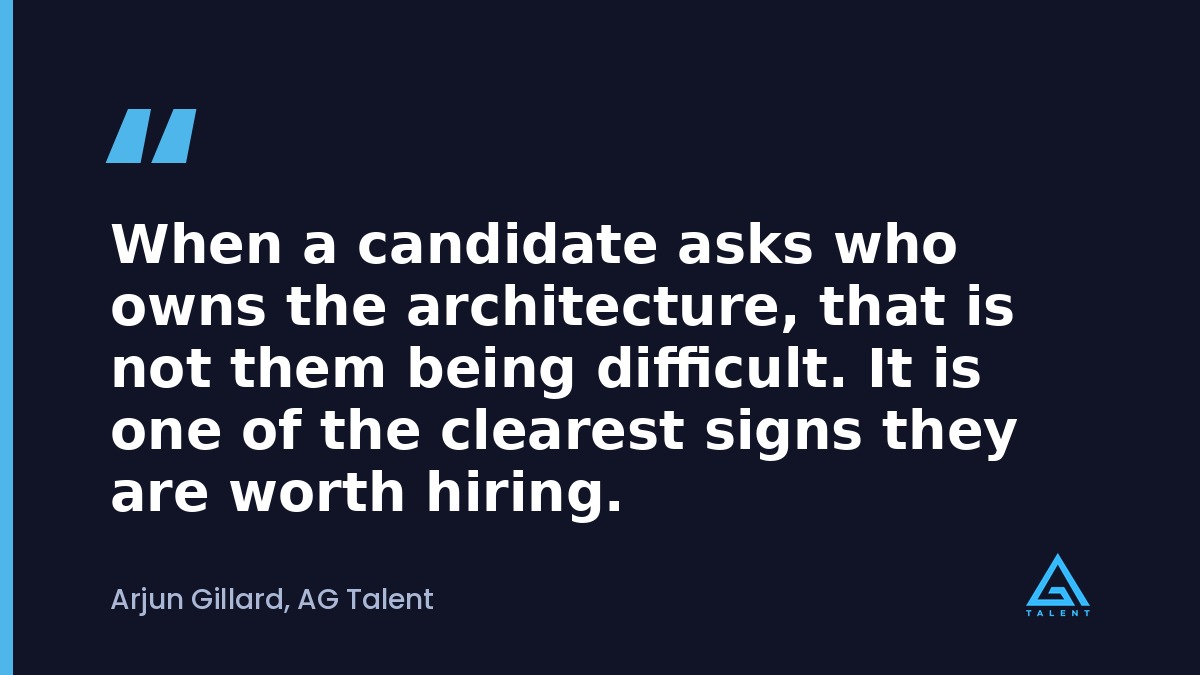
Some of the most reassuring conversations I have are with candidates who ask plenty of questions before they commit. Things like whether the architecture guardrails are already set, whether the product is running in containers, whether the CTO writes code, and what the company sees an engineer focusing on at this stage.
A more junior engineer often asks mainly about the stack and the salary. A senior one is doing something more valuable. They are making sure the role has been thought through before giving it a year of their life. That same instinct is what catches problems early once they are inside the team, so it is a quality to welcome rather than worry about.
It is a useful prompt for you, too. If the answers come easily, you are in great shape to hire. If a few are still taking shape, that is completely normal at an early stage, and the questions simply show you what is worth settling before you go to market.
How Fast Does the Process Need to Move?
Even a well-defined founding role can slip away if the process moves slowly. Strong engineers are usually in a couple of conversations at once, so a long gap before a first call can quietly cost you the hire.
Moving quickly does not mean lowering the bar. It means trimming the dead time and giving fast, clear feedback. For a high-trust hire like this, a sharp and respectful process is also a lovely first impression of what working with you is like, and candidates read it exactly that way.
How Can I Help?
The most useful thing I do on a founding engineer search is not the sourcing. It is helping you shape the role before it goes out, so the title, the level, the scope and the support all point in the same direction, and then running a process quick enough to land the strong candidates who will not wait around.
Get the role clear and well-supported, welcome the questions your best candidates ask, and keep the process moving. Do that, and the right person tends to lean in.
Questions this search answers
What is a founding engineer, and how is it different from a first hire?
To an experienced engineer the title carries a specific meaning: you own the architecture, make decisions that outlast you, carry real technical risk, and quite possibly do it alone for a while. It is a senior, high-trust role, and the engineers worth hiring treat it that way.
Why do strong candidates turn down founding engineer roles?
Usually because the title and the rest of the role do not line up. It is rarely deliberate. The title feels motivating, the scope evolves, and small gaps are hard to see from the inside. Candidates notice quickly and feel unsure rather than flattered.
What support should I offer a sole developer?
Say what sits around them. That might be a fractional CTO for patterns and tradeoffs, an architecture already in place, or a credible plan to hire a second engineer. A role that names all three beats a general promise of autonomy every time.
Should I worry if a candidate asks a lot of questions?
No, welcome it. A junior engineer asks mainly about the stack and the salary. A senior one is checking the role has been thought through before giving it a year of their life. That same instinct is what catches problems early once they are inside your team.
How quickly do I need to move on a founding engineer hire?
Quickly, without lowering the bar. Strong engineers are usually in a couple of conversations at once, so a long gap before a first call can cost you the hire. For a high-trust role, a sharp and respectful process is also the first impression of what working with you is like.
If you are about to hire your first or only engineer, I am always happy to look over the role before you take it to market. That one conversation tends to save the most time.
Arjun Gillard
Founder, AG Talent
agtalent.co.uk