The short answer
Senior engineers now assume you use AI, so it is no longer a differentiator. What they are screening is whether you use it with care: your review process, what broke last quarter, whether your test coverage held. Attracting senior software engineers in 2026 means being able to answer those questions with specifics.
Attracting senior software engineers has always been about more than salary. Culture, autonomy, the quality of the people around them, all of it matters. But this year something specific has shifted, and most founders have not caught up to it yet.
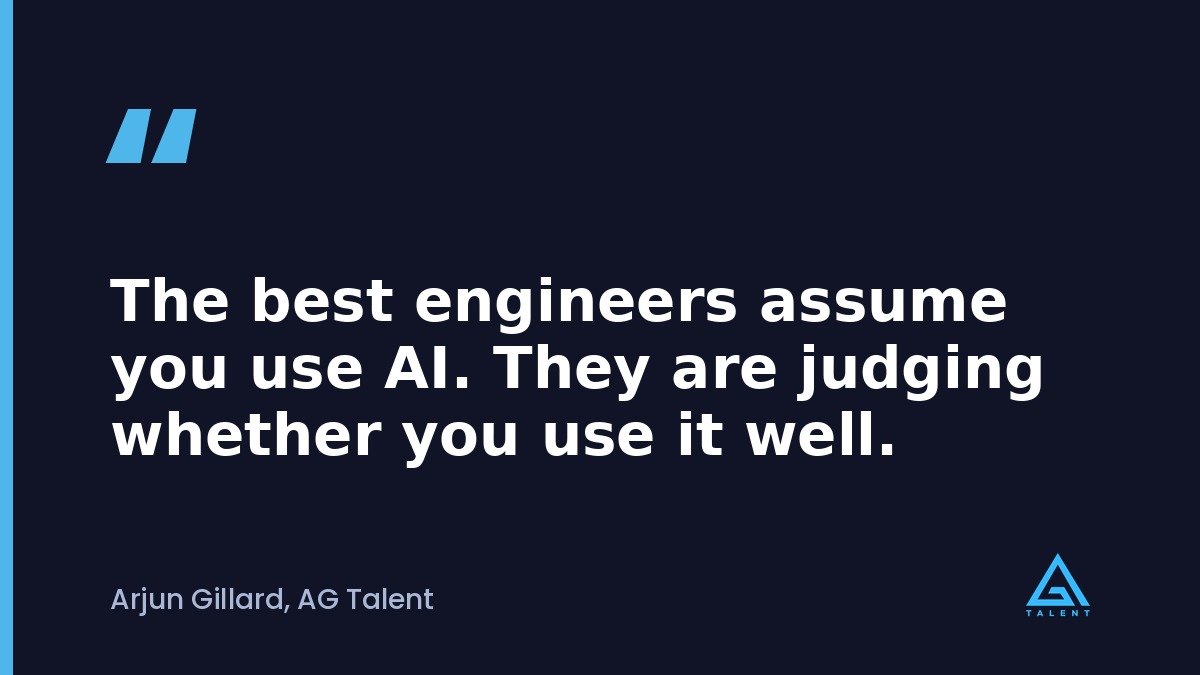
I help startups, scaleups and high growth businesses hire software engineers, and I speak to senior engineers every week. Over the last month one theme has come up so often that it is now the first thing I listen for. The strongest engineers are no longer asking whether a company uses AI. They assume it does. What they are screening for, carefully, is whether that company uses AI well or has let it erode the quality of the work.
Get this wrong and you will lose the exact people you are trying to hire, without ever knowing why.
Why Is a Happy Senior Engineer Leaving a Good Job?
One conversation stuck with me. A senior backend engineer, happy on paper, working on a mature codebase with more than ninety percent test coverage. Strong product. Reasonable team. He has started looking to leave.
The reason was not money and not the commute. It was, in his own words, “management enthusiasm for AI generated code without enough appreciation for the current product quality and test coverage.”
He is not anti AI. He uses it daily and rates it. What unsettled him was watching the standard slip. Code arriving faster than anyone could properly review it. The test coverage he was proud of beginning to fray. The craft that made the job satisfying being traded for raw speed.
He is not a lone voice. Another engineer put the principle plainly: “AI is a great tool, but it is only a tool. Doing fully agentic development, like vibe coding, it is not ready right now.” The best people are not resisting AI. They are resisting the loss of judgement around it, which is the same reason seniority still earns its cost on a small team.
Why Have AI Habits Become a Screening Signal?
Two or three years ago, using AI at all was a differentiator. A founder could say the team used modern tooling and that was enough to sound forward looking. That moment has passed. Adoption is near universal now, so it no longer signals anything.
What signals something is the how. Senior engineers have seen the failure mode up close. They have watched teams ship AI written code with thin review, felt the bug count climb, and been the ones asked to clean it up at two in the morning. So when they interview you, they are testing for it. They ask about your review process. They ask what broke last quarter and why. They listen for whether you talk about shipping, or about shipping well.
This is not caution for its own sake. These are people who take pride in systems that stay up under load. They want to know that joining you means doing good work, not firefighting someone else’s shortcuts.
What Does This Mean If You Are Hiring?
None of this is a reason to slow down your AI adoption. The engineers I speak to would be the first to tell you to keep going. The lesson is narrower and more useful than that.
First, treat how you use AI as part of your employer brand. Be ready to talk about it with specifics. If you are not sure how your process reads from the outside, that is what the free hiring process review is for. What does your review process look like now. Where do you trust AI and where do you deliberately keep a human in the loop. One engineer I spoke to said he avoids AI entirely for database migrations, and he wanted to know the team he joined thought that carefully too.
Second, know that vagueness reads as a warning. If your honest answer is that AI has lowered your standards and nobody has addressed it, your strongest candidates will sense it inside one interview. And they are precisely the people with the most other options.
Third, remember the flip side is a genuine advantage. If you have kept your bar high while adopting AI properly, say so plainly. It is one of the most attractive things you can offer a senior engineer right now, and almost nobody is articulating it well.
What Is the Leak Most Founders Cannot See?
The hard part about this shift is that it is invisible from the inside. Candidates rarely tell you this is why they passed. They give you a polite reason about timing or fit, and you never learn that they walked because your answers on quality did not reassure them.
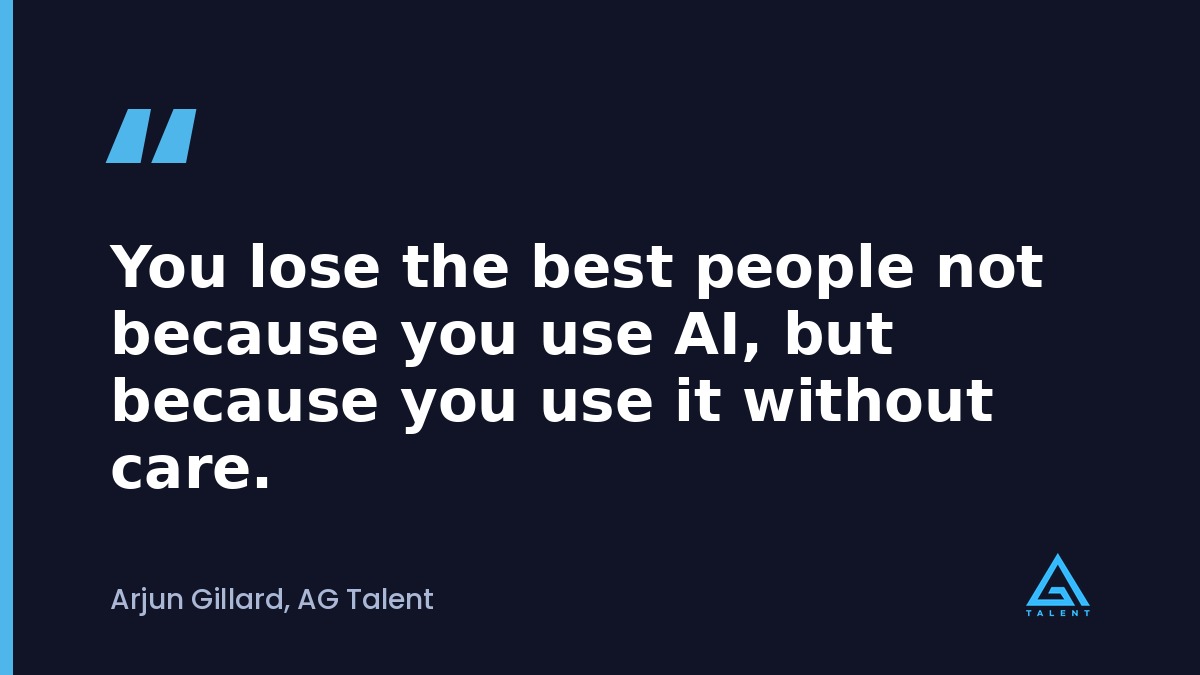
That is the leak. You lose the best people not because you use AI, but because you could not convince them you use it with care. In a market where senior engineers have real choice, that difference decides who says yes.
Where Does This Leave You?
The good news is that it is fixable, and quickly. Not with a new tool or a bigger budget, but by treating quality as something you can still talk about with pride. The engineers you most want are listening for exactly that.
Questions this search answers
What do senior engineers look for in a company in 2026?
They assume you use AI, so that is no longer the question. They are screening whether you use it with care. Expect them to ask about your review process, what broke last quarter and why, and whether you talk about shipping or about shipping well.
Is using AI heavily a turn-off for senior engineers?
No. The engineers worth hiring use these tools daily and rate them. What unsettles them is watching the standard slip: code arriving faster than anyone can properly review it, test coverage fraying, craft traded for raw speed. They are resisting the loss of judgement, not the tool.
How do I talk about AI in an interview without sounding vague?
With specifics. Say what your review process looks like now, where you trust AI and where you deliberately keep a human in the loop. One engineer told me he avoids AI entirely for database migrations and wanted to know the team he joined thought that carefully too.
Why do strong candidates drop out without telling me why?
Because they give you a polite reason about timing or fit. You rarely learn that they walked because your answers on quality did not reassure them. That is the leak, and it is invisible from the inside, which is why it goes unfixed.
Is a high quality bar actually an advantage when hiring?
Yes, and an underused one. If you have kept your bar high while adopting AI properly, say so plainly. It is one of the most attractive things you can offer a senior engineer right now, and almost nobody is articulating it well.
The same logic applies when you are writing the spec in the first place, which is covered in more detail in how to hire an AI engineer.
If you are hiring senior engineers this year and want to talk through how to position your team so the best people say yes, I am always happy to have that conversation.
Arjun Gillard
Founder, AG Talent
agtalent.co.uk